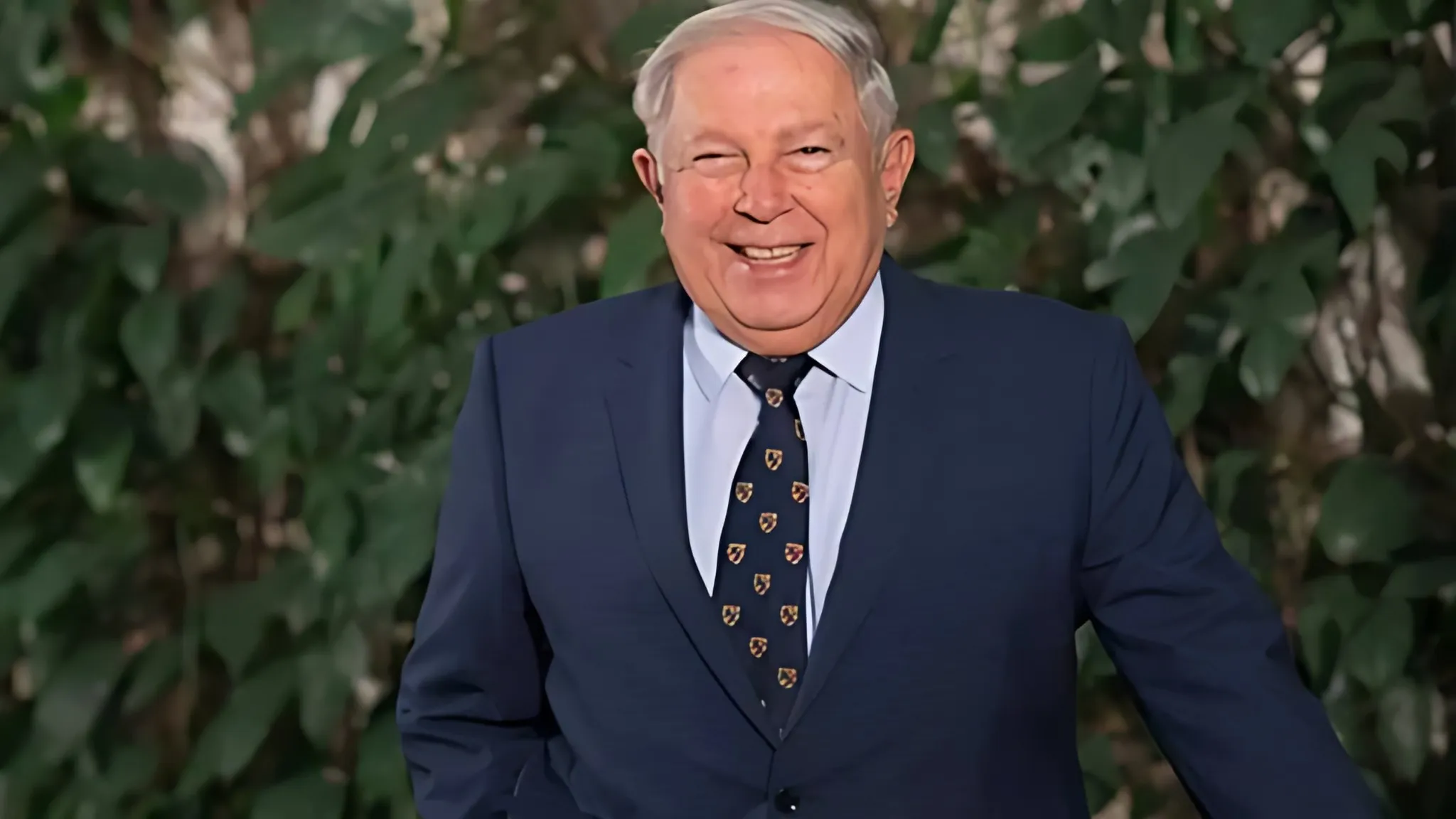
The story in 30 seconds
- Yusuf Hamied joined Cipla, founded by his father in 1935, in 1960 and was its managing director for 52 years.
- In 2000, a three-drug AIDS cocktail cost about $12,000 a patient a year in the West.
- On 6 February 2001, Cipla offered it to Médecins Sans Frontières at $350 a year, under a dollar a day.
- In 1961 he founded the Indian Drug Manufacturers' Association, which lobbied for the 1970 Patents Act.
- He remains Cipla's non-executive chairman and presided over its 90th AGM in June 2026.
In this story5 sections
Yusuf Hamied was running Cipla when, in February 2001, the Mumbai drug maker offered a three-drug AIDS cocktail for $350 a patient a year, less than a dollar a day. The same treatment cost about $12,000 a year in the West at the time. The offer, made to the medical charity Médecins Sans Frontières, became front-page news in The New York Times and put Cipla at the centre of a global fight over drug patents and prices.
He was born on 25 July 1936 in Vilnius, then part of Poland, to Khwaja Abdul Hamied, who had founded Cipla in 1935, and Luba Derczanska, according to Wikipedia. He studied in Mumbai, moved to England in 1954 and earned a degree in chemistry in 1957 and then a PhD at Christ's College, Cambridge, where he counts the Nobel laureate Alexander Todd as his mentor. He joined the family company in 1960.
Yusuf Hamied and India's patent law
In 1961 he founded the Indian Drug Manufacturers' Association, which lobbied for the reforms that became the Patents Act of 1970. Under that law, a company in India could patent the process of making a medicine but not the molecule itself. That allowed firms such as Cipla to work out their own ways of making drugs that were still under patent abroad, and to sell them at far lower prices.
A false start with AZT
Cipla's first attempt at AIDS medicine failed. In 1991 a scientist at the National Chemical Laboratory told him he had worked out how to make AZT, and the head of the Indian Council of Medical Research said the country needed the drug. In 1993 Cipla sold AZT capsules at $2 a day, against an international price of $12. For six months it sold none, and it was left with about 2 lakh unsold capsules. He was told the government had no money for treatment, and Cipla stopped making the drug. The account comes from the book Leadership To Last by Geoffrey Jones and Tarun Khanna, excerpted by Scroll, which draws on a 2013 interview with him.
How Yusuf Hamied priced AIDS drugs at a dollar a day
After reading about three-drug combination therapy in the mid-1990s, he restarted the effort, and by 2000 Cipla could source all three ingredients. In the West the cocktail meant 12 to 15 tablets a day, made by different companies. On 28 September 2000, given a three-minute slot at a European Union meeting, he offered it at $800 a patient a year, along with free know-how for countries that wanted to make the drugs themselves and a free medicine to prevent mother-to-child transmission. There were no takers.
On 6 February 2001 the activist Jamie Love asked whether Cipla could supply the cocktail for $1 a day. That same day Cipla offered Médecins Sans Frontières a regimen of two tablets a day at $350 a year. Donald McNeil of The New York Times called him late that night. "Dr Hamied, your life will not be the same after tomorrow," the reporter told him. The story ran the next morning.
The pushback was fierce. GlaxoSmithKline's chief executive, Jean-Pierre Garnier, called Cipla and other Indian generic makers pirates at a 2001 health forum, and 39 brand-name drug companies were suing South Africa over a 1997 law that made it easier to import cheaper medicine, Quartz reported in an excerpt from Katherine Eban's book Bottle of Lies. The companies later dropped the case. When critics said he was chasing market share in Africa, Yusuf Hamied replied that "before I die, I want to do some good."
What followed the 2001 offer
Prices kept falling. By 2013, Cipla supplied Africa with a generic version of the HIV combination sold in the US as Atripla at $96 a patient a year, against $24,000 in America, and India made 92% of the world's finished HIV medicines by volume, according to the Scroll excerpt. He received the Padma Bhushan in 2005. In 2020, after a large donation, the University of Cambridge renamed its chemistry department the Yusuf Hamied Department of Chemistry, a name it will carry until 2050.
He stepped back as managing director in 2013, after 52 years in the job, and stayed on as Cipla's non-executive chairman. At 89, he presided over the company's 90th annual general meeting in June 2026, according to the meeting transcript filed with the National Stock Exchange.
For more founders who changed what health care costs in India, read our stories on DR Mehta of Jaipur Foot and A Velumani of Thyrocare.
More from FoundersFeed: health founders and founders from Maharashtra.
This story is based on interviews Yusuf Hamied has given to the press, company filings and statements, and news reports, linked above. FoundersFeed did not interview Yusuf Hamied for this story. For corrections, write to editorial@foundersfeed.in.
Sources
Questions readers ask
Who is Yusuf Hamied?
He is the chairman of Cipla, the Mumbai drug maker founded by his father in 1935. A Cambridge-trained chemist, he led Cipla's 2001 offer of low-cost AIDS drugs.
What did Cipla offer in 2001?
On 6 February 2001 it offered Médecins Sans Frontières a three-drug AIDS cocktail, taken as two tablets a day, at $350 a patient a year, less than a dollar a day.
How much did AIDS drugs cost before Cipla's offer?
The three-drug cocktail cost about $12,000 a patient a year in the West in 2000, according to the account in the book Leadership To Last.
What was the Indian Patents Act of 1970?
It allowed patents on the process of making a medicine but not on the molecule itself, so Indian firms could make their own versions of drugs patented abroad. The industry body Yusuf Hamied founded lobbied for it.
Why is Cambridge's chemistry department named after Yusuf Hamied?
After a large donation announced in 2020, the University of Cambridge renamed it the Yusuf Hamied Department of Chemistry until 2050.

Written by
Dr. Mayank RajDr. Mayank Raj is Editor-in-Chief of FoundersFeed. He has spent more than eight years building India's startup incubation infrastructure, helping establish one of North India's largest incubation centres and mentoring more than 150 startups from first idea to first cheque. He now leads a national programme bringing innovation clubs and incubation centres to schools and colleges across India, and has been recognised with a national leadership award for that work.