The story in 30 seconds
- Joe Madiath came to Odisha as a 20-year-old student volunteer after the October 1971 cyclone.
- He registered Gram Vikas in Ganjam district on 22 January 1979.
- Its MANTRA programme starts only when every household in a village agrees to take part.
- The Skoll Foundation says over 105,000 families in 1,472 villages have toilets, bathing rooms and piped water through Gram Vikas.
- Gram Vikas won the first Kyoto World Water Grand Prize in 2006; he retired as chief executive in 2014.
In this story4 sections
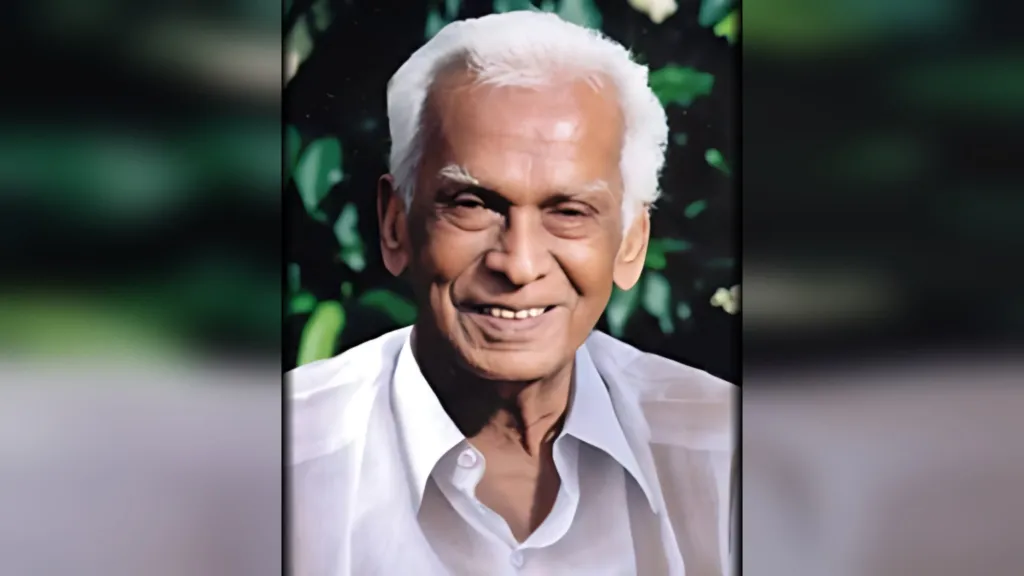
Joe Madiath was a 20-year-old student volunteer when he first came to Odisha in 1971, after a cyclone that killed about 10,000 people. He stayed. In January 1979 he registered Gram Vikas, a rural development group in Ganjam district that went on to bring piped water and household toilets to more than 1,400 villages, on one condition: every family in a village had to take part, or none would.
He was born in December 1950 in Cheruvally, Kerala, the eldest of five children in a family that owned a rubber estate in Kottayam district, according to Joe@Mohuda, a book of tributes Gram Vikas published in December 2025. At 12, he began organising workers on his family's farms to press for better treatment, the Skoll Foundation says. He went to school in Kolkata and studied English literature at Loyola College in Madras, where he was president of the students' union.
How Joe Madiath came to Odisha
As a student he led the Young Students' Movement for Development, and in 1967 and 1968 he cycled across India, Nepal, Bhutan and Sri Lanka, the book says. In 1971, he led about 400 student volunteers to run camps for refugees from the Bangladesh war. Later that year he moved to Odisha to help families hit by the cyclone, first around Pattamundai, then part of Cuttack district, and later in Ganjam. Several volunteers stayed on after the relief work ended, and that group became the core of Gram Vikas, the Stanford Social Innovation Review reported in 2022.
He arrived in Mohuda, near Berhampur, in 1976, at about 25, and Gram Vikas was registered as a society on 22 January 1979. Its early work was with Adivasi communities on health care, childcare, literacy, land rights and wasteland restoration. It also took on liquor sellers and exploitative moneylenders, and it built household biogas plants, for 54,000 families by 1993, SSIR reported.
The all-or-none rule
A 1992 study by Gram Vikas found that 80% of illness in rural Odisha was linked to poor drinking water, much of it contaminated by human waste, SSIR reported. In the 1990s the organisation moved from biogas to water and sanitation. Its flagship programme, MANTRA, short for Movement and Action Network for Transformation of Rural Areas, starts only when every adult in a village agrees to take part, whatever their caste, class or gender.
Each household gets a toilet and a bathing room, and an overhead tank supplies piped water to three taps in every home. Families pay a one-time Rs 1,000 each into a village corpus, whose interest helps new households join, and contribute about half the cost of the toilet and bathing room. A village committee of five men and five women runs the system. "There cannot be sustainability unless the entire village is mobilized," Madiath told SSIR.
The rule was not easy to enforce. He told the magazine that the organisation faced resistance in almost every village from the powerful and the better-off, and that upper castes did not want to share water with lower-caste homes.
What Joe Madiath built
The Skoll Foundation says more than 105,000 families in 1,472 villages have built household toilets and bathing rooms and gained piped water through Gram Vikas, which works in Odisha and Jharkhand. Gram Vikas also runs residential schools; SSIR counted four, serving about 1,500 children.
The work drew international attention. The Schwab Foundation named him an outstanding social entrepreneur in 2001, and Gram Vikas won the World Habitat Award in 2003, according to Gram Vikas. On 22 March 2006 it received the first Kyoto World Water Grand Prize at the World Water Forum in Mexico City. He is also a Skoll Award winner, and Abhijit Banerjee and Esther Duflo, who later shared the Nobel prize in economics, discussed Gram Vikas in their book Poor Economics, Wikipedia notes.
He retired as chief executive in 2014 and became chairman of the board, and Liby Johnson has been executive director since October 2017, according to the Skoll Foundation. The tribute book, compiled by Jayapadma RV, says he led the organisation for nearly four decades and still visits villages and guides staff.
For more founders whose work began in villages, read our stories on Sridhar Vembu's rural model at Zoho and Genrobotics, which built a robot to end manual scavenging.
More from FoundersFeed: rural impact founders and founders from Odisha.
This story is based on interviews Joe Madiath has given to the press, company filings and statements, and news reports, linked above. FoundersFeed did not interview Joe Madiath for this story. For corrections, write to editorial@foundersfeed.in.
Sources
Questions readers ask
Who founded Gram Vikas?
Joe Madiath, a Kerala-born social worker who came to Odisha after the 1971 cyclone, founded Gram Vikas. It was registered as a society on 22 January 1979.
What is Gram Vikas's MANTRA programme?
MANTRA, or Movement and Action Network for Transformation of Rural Areas, gives every household in a village a toilet, a bathing room and piped water, but starts only when all households agree to take part.
How many families has Gram Vikas reached?
The Skoll Foundation says more than 105,000 families in 1,472 villages have built household toilets and bathing rooms and gained piped water through Gram Vikas.
What awards has Gram Vikas won?
They include the World Habitat Award in 2003 and the first Kyoto World Water Grand Prize, awarded on 22 March 2006 in Mexico City. The Schwab Foundation named Madiath an outstanding social entrepreneur in 2001.
Who runs Gram Vikas now?
Liby Johnson has been executive director since October 2017. Madiath retired as chief executive in 2014, according to the Skoll Foundation.

Written by
Dr. Mayank RajDr. Mayank Raj is Editor-in-Chief of FoundersFeed. He has spent more than eight years building India's startup incubation infrastructure, helping establish one of North India's largest incubation centres and mentoring more than 150 startups from first idea to first cheque. He now leads a national programme bringing innovation clubs and incubation centres to schools and colleges across India, and has been recognised with a national leadership award for that work.