The story in 30 seconds
- Paul Basil founded the Rural Innovation Network in Chennai in 2001; it was renamed Villgro in 2009.
- It began by scouting rural inventors and connected with about 600 within five years.
- Villgro gives early-stage social enterprises seed capital of up to about $100,000, plus mentoring and technical help.
- By 2020 it had worked with more than 200 early-stage social enterprises in India.
- Basil set up the impact fund Menterra in 2015 and handed Villgro's CEO role to Srinivas Ramanujam in 2020.
In this story5 sections
Paul Basil founded the Rural Innovation Network in Chennai in 2001 to turn inventions made in villages into businesses, according to an ISDM case study on the organisation. Renamed Villgro in 2009, the social enterprise incubator had worked with more than 200 early-stage, innovation-based social enterprises in India by 2020, the Yale School of Management reported.
Where Paul Basil started
Basil grew up in a town in central Kerala in a family of medical professionals, and his father ran a nursing home, the case study says. He went to a boarding school founded by Mary Roy, whose activism he later cited as an influence. He then took a postgraduate degree in forestry management at the Indian Institute of Forest Management in Bhopal. Travelling with non-profits during that course exposed him to rural poverty.
The Rural Innovation Network was inspired by Anil Gupta's Honey Bee Network, according to the case study. The team first scouted rural districts and worked with local media to find village inventors. It connected with about 600 innovators within five years.
From scouting to incubation
In 2004 it started L-RAMP, a single-window incubation service supported by the Lemelson Foundation and run with IIT Madras in its first phase, from 2004 to 2009. By 2007 it was incubating 19 innovations.
Not every experiment lasted. Samruddhi, a rural retail chain, opened with four stores in Erode district in 2007-08 and became a for-profit company, Villgro Innovations Marketing, in 2009-10. By about 2011 it had around 10 stores, reached about 400 villages and recorded Rs 1.5 crore in sales, but it ran only until about 2014. A user-centred innovation programme backed by the Rockefeller Foundation, started in 2008, tested products with rural users. A 10-month fellowship for mid-career professionals, begun in 2008-09, still runs.
"We are essentially a social business incubator," Basil said in 2010, as quoted in the case study. The 2009 rename was partly meant to make the name clearer and to signal a move towards later-stage enterprises.
What Villgro offers a start-up
Villgro works in agriculture, health and climate action, with a smaller education and employability vertical, the case study says. It offers seed capital of up to about $100,000 (Rs 79 lakh), mentoring, technical help, access to its fellows and a network of service providers, through a seed programme that runs over nine months. In 2012, Basil put the tally at about 70 enterprises supported over 12 years, $4 million to $5 million raised and 3,800 jobs created.
In a 2019 talk at Yale, Basil argued that a successful social enterprise must be "customer first" and that its unit economics have to work locally. He cited Venus Burner, a cookstove maker. Its first model was lighter and more fuel-efficient but failed because it was too expensive and seemed low-quality; a heavier, cheaper second version succeeded.
Paul Basil and Menterra
In 2015 Basil set up Menterra, a social impact fund, with P. R. Ganapathy and Mukesh Sharma, with the Lemelson Foundation among its backers. It operates independently, works with Villgro's incubatees and invests up to Rs 4 crore per company, the case study says.
Villgro also went abroad. It opened in Kenya in 2015 (renamed Villgro Africa in 2020), the Philippines in 2016 and the US in 2017, the last mainly as a node connecting impact incubators. Srinivas Ramanujam succeeded Basil as Villgro's CEO on 1 April 2020. Basil is also listed as a co-founder of Villfarm Agri-Solutions on his India Development Review contributor page.
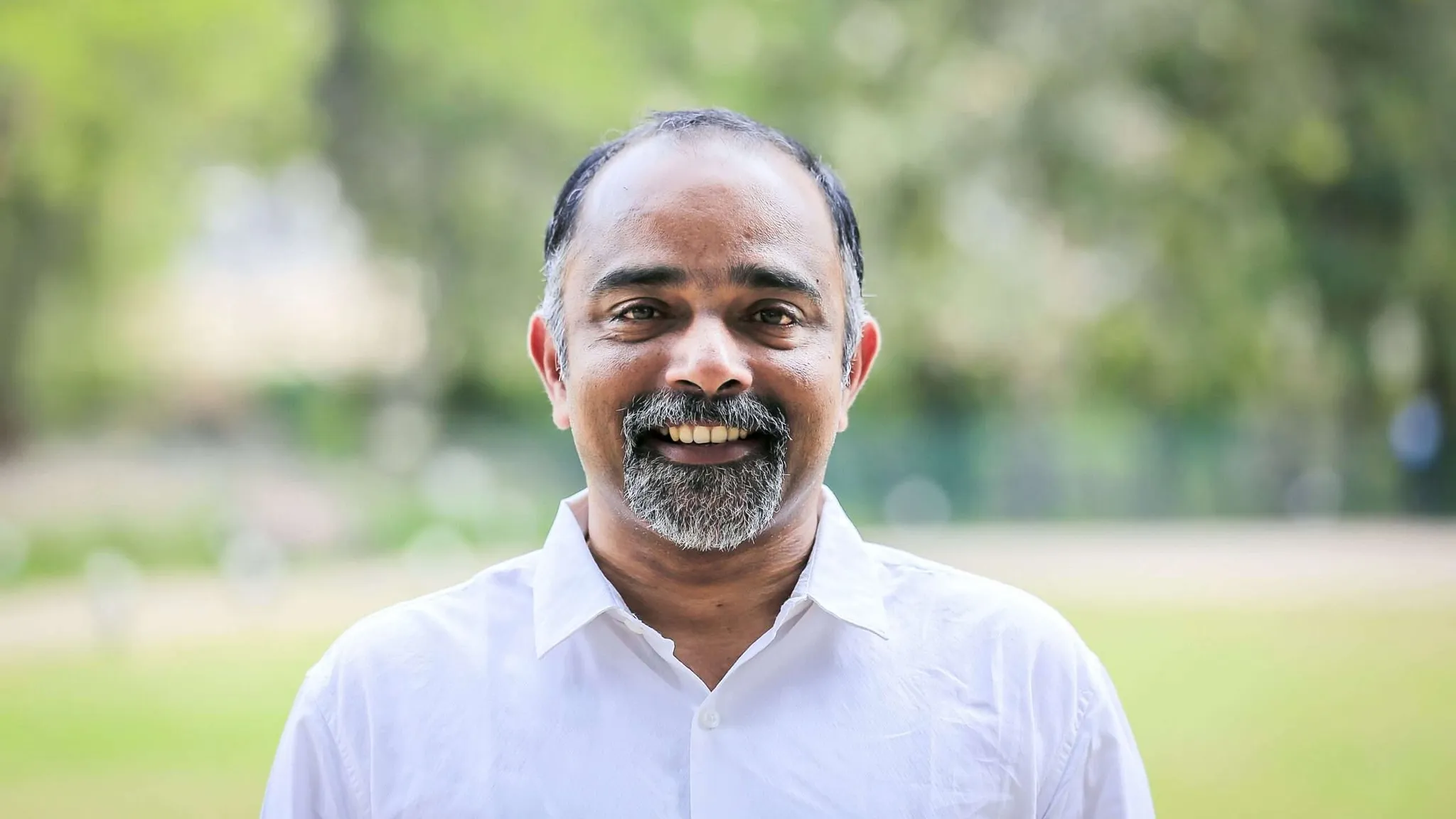
As Villgro founder, Paul Basil first went looking for village inventors; the fund he set up now invests in the companies Villgro incubates.
For more founder stories, read our pieces on Dharambir Kamboj and Arunachalam Muruganantham.
More from FoundersFeed: rural impact founders and founders from Tamil Nadu.
This story is based on a case study published by ISDM, a talk Paul Basil gave at Yale and published profiles, linked above. FoundersFeed did not interview him for this story. Enterprise counts vary by year and source; we give the year for each. For corrections, write to editorial@foundersfeed.in.
Sources
Questions readers ask
Who is Paul Basil?
The founder of Villgro, a Chennai-based incubator for early-stage social enterprises, and a co-founder of the impact fund Menterra.
What does Villgro do?
It gives early-stage social enterprises in agriculture, health and climate action seed capital, mentoring and technical help.
When was Villgro founded?
In 2001, as the Rural Innovation Network. It took the name Villgro in 2009.
How many enterprises has Villgro supported?
More than 200 early-stage social enterprises in India, according to a 2020 Yale School of Management report.
Who runs Villgro now?
Srinivas Ramanujam succeeded Paul Basil as CEO on 1 April 2020.

Written by
Dr. Mayank RajDr. Mayank Raj is Editor-in-Chief of FoundersFeed. He has spent more than eight years building India's startup incubation infrastructure, helping establish one of North India's largest incubation centres and mentoring more than 150 startups from first idea to first cheque. He now leads a national programme bringing innovation clubs and incubation centres to schools and colleges across India, and has been recognised with a national leadership award for that work.