The story in 30 seconds
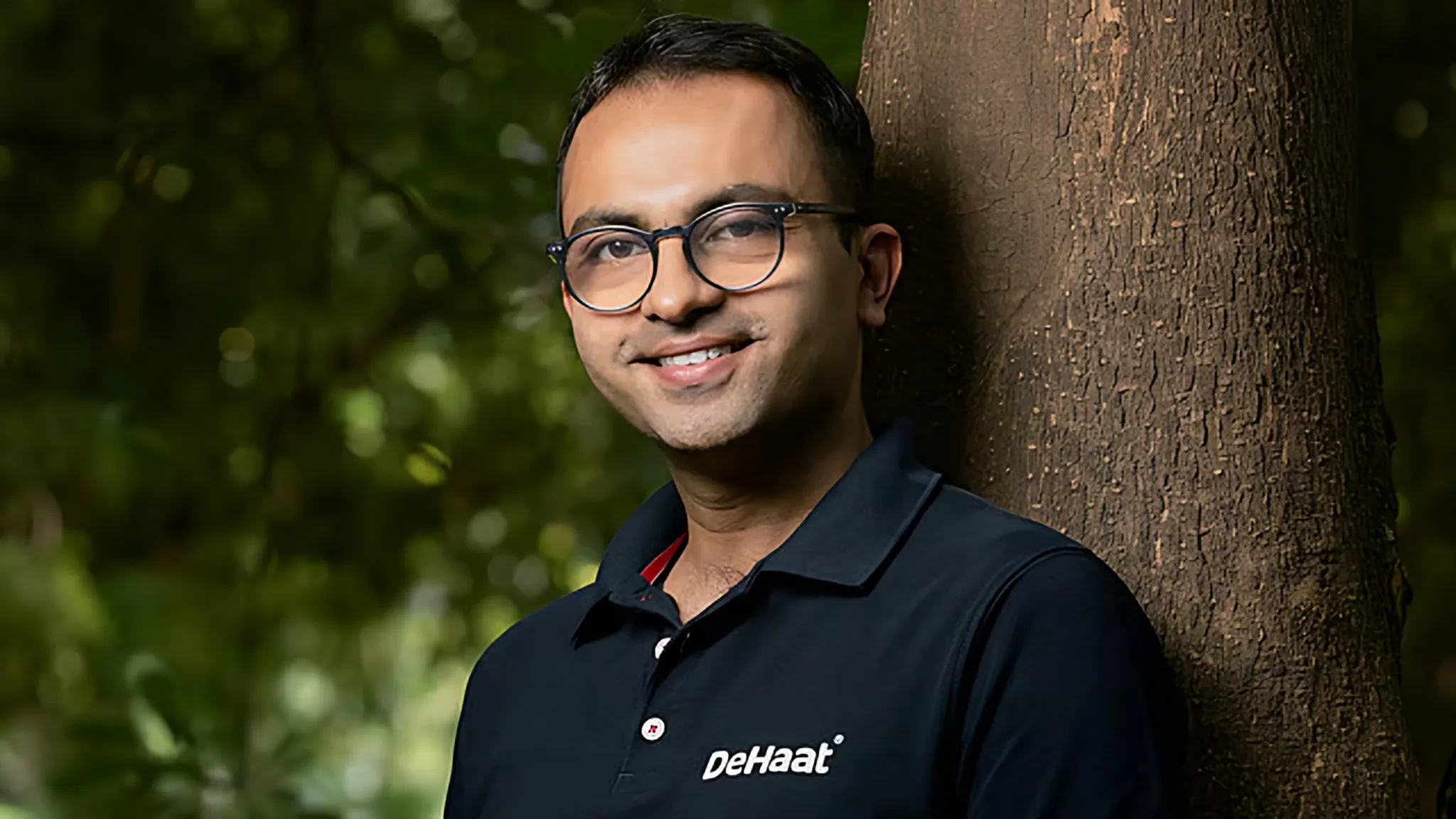
- Shashank Kumar grew up in a farming family in Chhapra, Bihar, and graduated from IIT Delhi in 2008.
- After working as a supply-chain consultant, he returned to Bihar in 2012 to start DeHaat.
- DeHaat Centres, run by trained local entrepreneurs, sell inputs, give crop advice and buy produce.
- Its farmer count ranges from 65,000 in 2019 to over 18 lakh in a 2025 company figure, depending on the source.
- FY26 revenue fell about 10% to ₹2,715 crore with a net loss of ₹224 crore, NewsBytes reported.
In this story5 sections
Shashank Kumar was born into a farming family in Chhapra district of Bihar. He studied at a local school until Class 3 and then left the state to study, The Better India reported. After graduating from IIT Delhi in 2008, he worked as a supply-chain consultant for companies such as Unilever, Mother Dairy, Britannia and PepsiCo.
That work showed him both ends of the food chain. Prices kept rising, yet neither the people buying food nor the farmers growing it were happy. "There was clearly a big gap on both sides," he told YourStory, which reported that he kept talking to farmers on his visits home.
In 2012 he went back to Bihar and set up Green Agrevolution, the company behind DeHaat, with seed capital of ₹15 lakh, YourStory reported in 2016. He started out with Manish Kumar, an IIT Kharagpur graduate who is no longer with the company, according to YourStory's 2021 report. Inc42 lists Shyam Sundar Singh, Amrendra Singh, Adarsh Srivastava and Abhishek Dokania as his co-founders.
Two slow years
Farmers did not trust a technology-led company at first. Until 2014, the team mostly worked on understanding local farmers. Its first step was to pool some farmers' produce and take it to bigger markets for better prices, The Better India reported. By 2016, DeHaat had 30 centres serving 10,200 farmers in Bihar and Odisha, and selling farm produce brought in 70% of its revenue, according to YourStory.
How the model works
A DeHaat Centre is a shop run by a local micro-entrepreneur whom DeHaat trains. The entrepreneur invests in the centre and earns from its daily business. In 2019, each centre served 600 to 800 farmers within 3 to 5 km. Farmers could order seeds, fertiliser and other inputs through an app, a helpline or the centre, usually for same-day delivery, and got free crop advice every week. Ramesh Sah, who had run a centre in West Champaran since May 2016, said he earned about ₹18,000 a month, The Better India reported.
DeHaat also buys produce and sells it to large buyers. On a NITI Aayog Frontier Tech page updated in December 2025, the company says its AI advisory uses satellite images, weather data and soil profiles to send crop-stage advice for more than 30 crops in regional languages. The page notes that it is a submission and not an endorsement by NITI Aayog.
A note on the numbers
DeHaat's farmer count depends on the source and the year. The Better India put it at about 65,000 farmers in 2019. YourStory reported more than 3.6 lakh farmers and 1,300 micro-entrepreneurs in Bihar, Uttar Pradesh, Jharkhand and Odisha in 2021, the year DeHaat raised $30 million in a Series C round led by Prosus Ventures. The NITI Aayog page says more than 18 lakh farmers across 12 states, over 11,000 DeHaat Centres and more than 11,000 institutional buyers. These are the company's own figures.
The profit test
In FY25, DeHaat's operating revenue rose 11% to ₹3,009.9 crore and it reported a net profit of ₹369 crore, Inc42 reported. That profit came from a one-time, non-cash fair-value gain of ₹576.1 crore; without it, DeHaat would have posted a loss. Its loss in FY24 was ₹1,133.1 crore. Exports brought in ₹430 crore from 32 markets, and its own private-label products made up about 25% of revenue, Inc42 reported.
In July 2025, company sources told Inc42 that DeHaat had made an EBITDA profit of ₹5 crore to ₹10 crore in the first quarter of FY26 and was aiming to be profitable for the full year. Kumar said a stock market listing was at least two years away and would come only after sizable profitability.
The full-year figures came out weaker. DeHaat's FY26 revenue fell about 10% to ₹2,715 crore and it posted a net loss of ₹224 crore, as it shifted towards its own brands for better margins and price control, NewsBytes reported in November 2026. Cost cuts did not make up for the drop in sales.
For more founders building in rural India, read our stories on Sridhar Vembu's rural model at Zoho and Dharambir Kamboj, the farmer who built a food processing machine.
More from FoundersFeed: rural impact founders and founders from Bihar.
This story is based on interviews Shashank Kumar has given to the press, company filings and statements, and news reports, linked above. FoundersFeed did not interview Shashank Kumar for this story. For corrections, write to editorial@foundersfeed.in.
Sources
- The Better India: IIT Delhi grad helps 65,000 Bihar farmers through DeHaat (2019)
- YourStory: The turning point for farmers, DeHaat (2021)
- YourStory: Green Agrevolution and DeHaat, startup of the day (2016)
- NITI Aayog Frontier Tech: DeHaat's AI-enabled agriculture network (2025)
- Inc42: DeHaat posts ₹369 crore profit in FY25 on non-cash gains (2025)
- Inc42: DeHaat turns profitable in Q1 FY26 (2025)
- NewsBytes: DeHaat revenue falls nearly 10% to ₹2,715 crore (2026)
Questions readers ask
Who founded DeHaat?
Shashank Kumar started DeHaat in Bihar in 2012. Inc42 lists Shyam Sundar Singh, Amrendra Singh, Adarsh Srivastava and Abhishek Dokania as co-founders; YourStory reported he started out with Manish Kumar, who has since left.
What does DeHaat do?
It sells seeds, fertiliser and other inputs through local DeHaat Centres and an app, gives crop advice, and buys farmers' produce to sell to large buyers.
How many farmers does DeHaat serve?
Figures vary by source: about 65,000 in 2019, more than 3.6 lakh in 2021, and over 18 lakh across 12 states on a NITI Aayog page with company-submitted figures.
Is DeHaat profitable?
It reported a FY25 net profit of ₹369 crore because of a non-cash gain, Inc42 reported. In FY26 it posted a net loss of ₹224 crore, NewsBytes reported.
Where is Shashank Kumar from?
He grew up in a farming family in Chhapra district, Bihar, and studied at IIT Delhi.

Written by
Dr. Mayank RajDr. Mayank Raj is Editor-in-Chief of FoundersFeed. He has spent more than eight years building India's startup incubation infrastructure, helping establish one of North India's largest incubation centres and mentoring more than 150 startups from first idea to first cheque. He now leads a national programme bringing innovation clubs and incubation centres to schools and colleges across India, and has been recognised with a national leadership award for that work.