The story in 30 seconds
- Sanjay Nayak co-founded Tejas Networks in Bengaluru in 2000 with Kumar Sivarajan and Arnob Roy.
- Before Tejas he worked at Cadence and set up Synopsys in India, which he ran from 1997 to 2000.
- Tejas listed on the BSE and NSE in June 2017 at a valuation of Rs 2,301 crore.
- Tata's Panatone Finvest held a 52.45% majority stake by April 2022.
- He retired as CEO and MD in 2023; Tejas posted a Rs 909 crore net loss in FY26.
In this story4 sections
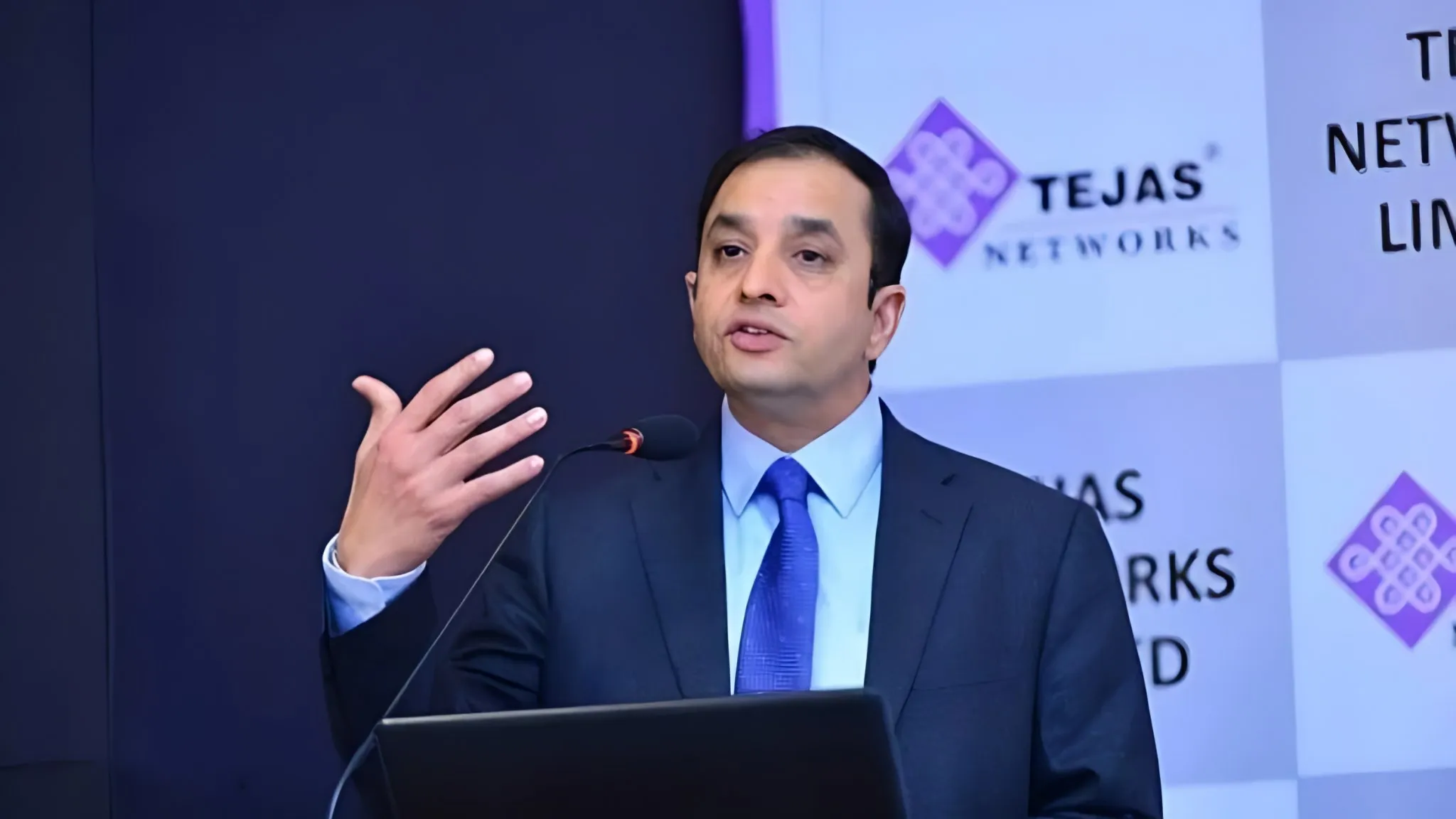
Sanjay Nayak co-founded Tejas Networks in Bengaluru in 2000 to build telecom equipment in India that could compete around the world. The company listed on the stock exchanges in 2017, the Tata group took majority control in 2022, and in 2023 he retired as chief executive and managing director, having led it since it was founded.
He grew up in Madhya Pradesh, where his father, a state government engineer, built dams and was transferred often, Electronics For You reported in a 2024 profile. To spare him constant changes of school, his father sent him in Class 5 to Rajkumar College, a boarding school in Raipur, where he spent eight years.
Sanjay Nayak's road from chip software to telecom
After engineering in India, he completed a master's degree at North Carolina State University in 1987, he told Electronics Bazaar in 2014. He then joined Cadence, which was setting up an Indian branch, and moved to Noida in early 1988 as one of its first Indian employees. NC State's electrical and computer engineering department says he was a director of research and development at Cadence and worked on simulation software used to design chips. He says he set up Synopsys in India in 1997 and ran it until 2000.
"My only ambition was to build a world class product company from India," he told Electronics Bazaar about starting Tejas in 2000. He believed India's strength in IT services could support product companies, that the country could serve as both a home market and a base for exports, and that telecom traffic was shifting from voice to data.
Building Tejas Networks
His co-founders were Kumar Sivarajan, an academic at the Indian Institute of Science in Bengaluru, and Arnob Roy, a former colleague, and the early money came from the entrepreneur Gururaj Deshpande, according to Wikipedia's entry on Tejas. Its first products were optical networking systems that could move data at speeds set by the customer and reroute traffic when a link failed. It signed ten customers in 2002 and 2003.
The going was hard. He told Electronics Bazaar that India lacked a mature electronics manufacturing base and people with a product mindset, that he was new to telecom and to running a startup, and that the company was hit by turmoil in the telecom sector and the 2G spectrum scandal. By 2013 and 2014, Tejas had added packet transport products and won customers in South East Asia, Africa and other emerging markets, and its export revenue had overtaken domestic sales for the first time.
Tejas listed on the BSE and NSE in June 2017 at a valuation of Rs 2,301 crore. In July 2021, Panatone Finvest, a Tata Sons subsidiary, agreed to invest Rs 1,884 crore for a 43.35% stake, and by April 2022 its holding had reached 52.45%, giving Tata majority control. Tejas also bought 64% of Saankhya Labs, a wireless and semiconductor company, in March 2022.
Sanjay Nayak's retirement in 2023
On 29 March 2023, Tejas told the stock exchanges that Nayak wished to take voluntary retirement to pursue other personal interests and would step down by the next annual general meeting, its filing shows. The board named Anand Athreya, a former Juniper Networks executive, chief executive and managing director designate from 3 April 2023. In the company's announcement, he said he had led Tejas "from a startup to India's first publicly-listed deep-technology telecom products company."
After he left, Tejas won a Rs 7,492 crore order in August 2023 to supply 4G and 5G radio equipment for about 100,000 BSNL sites, with Tata Consultancy Services involved in the contract, Wikipedia notes. Athreya resigned in 2025, and co-founder Arnob Roy became managing director and chief executive from 15 April 2026, tele.net reported. The company has since hit a rough patch. Its revenue fell to Rs 1,103 crore in FY26 from Rs 8,923 crore a year earlier, and it posted a net loss of Rs 909 crore against a profit of Rs 447 crore, the Free Press Journal reported.
Outside the company, he has chaired FICCI's sectoral committee on science, technology and innovation and served as national co-chairman of the Telecom Equipment and Services Export Promotion Council, according to a 2021 conference profile. The India Electronics and Semiconductor Association gave him its Technovation Sarabhai Award, Tejas says. His advice to founders, as he put it to Electronics Bazaar, is that a startup is a marathon rather than a 100 metre dash.
For more founders building hard technology in India, read our stories on the founders of Skyroot Aerospace and the founders of Sarvam AI.
More from FoundersFeed: deep tech founders and founders from Karnataka.
This story is based on interviews Sanjay Nayak has given to the press, company filings and statements, and news reports, linked above. FoundersFeed did not interview Sanjay Nayak for this story. For corrections, write to editorial@foundersfeed.in.
Sources
- Electronics For You: Sanjay Nayak profile (2024)
- Electronics Bazaar: Sanjay Nayak interview (2014)
- NC State ECE: Sanjay Nayak
- Wikipedia: Tejas Networks
- BSE filing: Tejas Networks board outcome (March 2023)
- Tejas Networks: Leadership change announcement (2023)
- tele.net: Arnob Roy named MD and CEO (2026)
- Free Press Journal: Tejas Networks FY26 results (2026)
- Tejas Networks: Awards and recognition
- NPC 2021: Sanjay Nayak speaker profile
Questions readers ask
Who founded Tejas Networks?
Sanjay Nayak founded Tejas Networks in Bengaluru in 2000 with Kumar Sivarajan and Arnob Roy, with early funding from Gururaj Deshpande.
Is Sanjay Nayak still the CEO of Tejas Networks?
No. Tejas announced on 29 March 2023 that he would take voluntary retirement, and he stepped down as CEO and MD that year. Arnob Roy became MD and CEO from 15 April 2026.
Who controls Tejas Networks?
Panatone Finvest, a Tata Sons subsidiary, raised its stake to 52.45% by April 2022, giving the Tata group majority control.
What did Sanjay Nayak do before Tejas?
He worked at Cadence in India, then says he set up Synopsys in India in 1997 and ran it until 2000.
How is Tejas Networks doing now?
Tejas reported FY26 revenue of Rs 1,103 crore, down from Rs 8,923 crore in FY25, and a net loss of Rs 909 crore, the Free Press Journal reported.

Written by
Harshvardhan KothariHarshvardhan Kothari is Editor, Innovators and Deep Tech, at FoundersFeed. He covers India's AI and deep-tech builders, the research behind them and the rules that shape the sector, including MSME law and cross-border trade policy. He also tracks India's IPO pipeline.