The story in 30 seconds
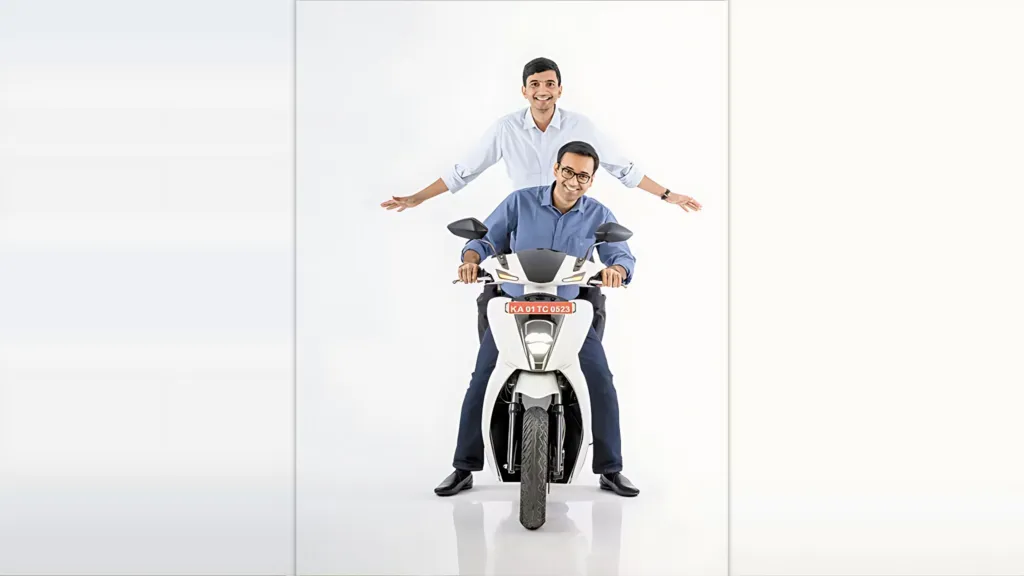
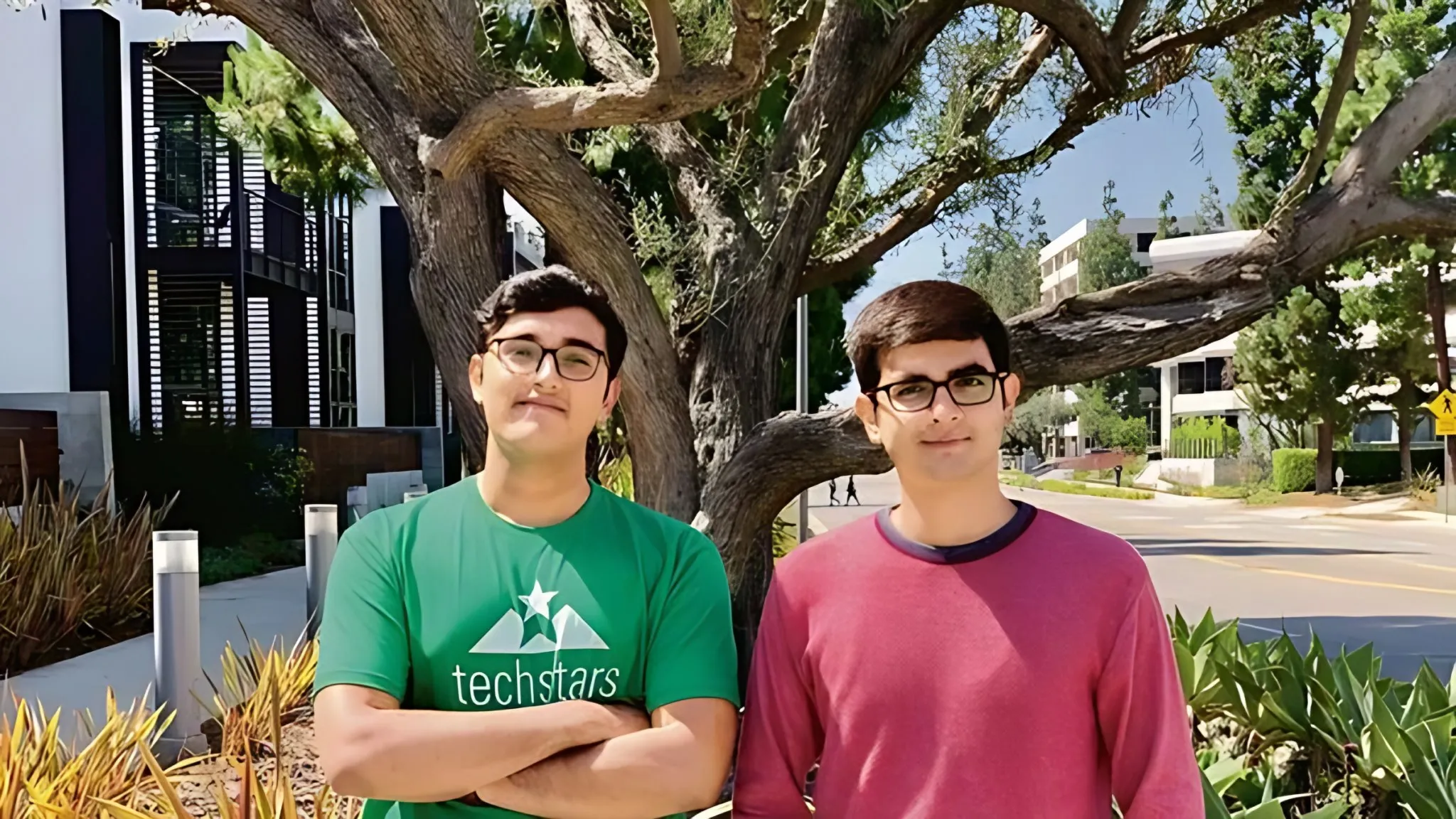
- Awais Ahmed and Kshitij Khandelwal worked together on Hyperloop India at BITS Pilani.
- They started Pixxel in February 2019 with money borrowed from Ahmed's father.
- Pixxel builds hyperspectral satellites, which record far more bands of light than ordinary cameras.
- It has six Firefly satellites in orbit and contracts with NASA, the US NRO and the Indian Air Force.
- It raised $100 million in September 2026, and its first Honeybee satellite is expected in 2027.
In this story4 sections
Awais Ahmed grew up in a village in Karnataka's Chikkamagaluru district. His interest in space began, Inc42 reported, when a travelling salesman brought encyclopaedias to the village. At BITS Pilani he studied mathematics and joined the student satellite team, which worked with ISRO scientists, Outlook Business reported.
In 2017 he was engineering lead of Hyperloop India, a student team that reached the finals of SpaceX's Hyperloop Pod Competition, Entrepreneur India reported. His batchmate Kshitij Khandelwal, who had been a research intern at the Defence Research and Development Organisation (DRDO), worked on the same team as a control systems engineer, NewsX reported.
A problem with satellite data
The idea for Pixxel came in 2018, when the two were working on the IBM Watson AI challenge and found that existing satellite data was not good enough for what they wanted to build, News24 reported. They settled on hyperspectral imaging, which records many narrow bands of light rather than the few that an ordinary satellite camera captures, as Channel Insider explained. Early on, they pitched it as a way to help farmers, Business Standard reported in 2019.
They started Pixxel in February 2019 with money borrowed from Ahmed's father, according to News24. "Years ago, we set out to build a health monitor for the planet," Ahmed said in 2026, CXO Digital Pulse reported.
Six satellites in orbit
Pixxel put two demonstration satellites, Shakuntala and Anand, into orbit in 2022 aboard SpaceX and ISRO's PSLV rockets, ThePrint reported. It launched its first three commercial satellites, called Fireflies, in 2025, Inc42 reported, and three more later that year, Analytics India Magazine reported. Each Firefly images the ground at about 5-metre resolution across more than 135 spectral bands, according to Inc42.
Contracts followed. NASA selected Pixxel in 2024 as a supplier under a commercial satellite data programme worth up to $476 million, Inc42 reported. In May 2026, the US National Reconnaissance Office gave it a contract to assess commercial hyperspectral imaging, CXO Digital Pulse reported. At home, a Pixxel-led group was chosen through IN-SPACe to build India's national Earth observation constellation, according to Inc42, and Pixxel has an Indian Air Force contract for a 200 kg modular satellite, Outlook Business reported. In June 2026, Pixxel and Sarvam AI announced plans for an AI-powered orbital data centre satellite, Telangana Today reported.
Money and scrutiny
In September 2026, Pixxel raised $100 million in a Series C round led by Temasek and Seraphim, taking its total funding to $195 million, Outlook Business reported. The round was described as the largest single funding round by an Indian space company. The business is still small: Pixxel reported revenue of ₹39.3 crore and a loss of ₹30.8 crore in FY25, according to Inc42.
Growth has brought questions. After Pixxel set up a US subsidiary, Pixxel Federal, to bid for American government work, critics online asked who controls the company. In November 2026, Ahmed said Pixxel remains headquartered, owned, managed and controlled in India, Inc42 reported.
Next come the Honeybees, satellites that will add shortwave infrared bands. The first is expected in 2027, Channel Insider reported, and Pixxel plans to launch at least 12 more satellites over the next year and into early 2028, according to Outlook Business. Ahmed is CEO and Khandelwal is CTO.
For more Indian space and deep tech founders, read our stories on Skyroot Aerospace's founders and the founders of Sarvam AI.
More from FoundersFeed: deep tech founders and founders from Karnataka.
This story is based on interviews Awais Ahmed and Kshitij Khandelwal have given to the press, company statements, and news reports, linked above. FoundersFeed did not interview them for this story. For corrections, write to editorial@foundersfeed.in.
Sources
- Inc42: From Firefly to Honeybee, how Pixxel is widening what satellites can see (2026)
- Outlook Business: Google-backed Pixxel raises $100 million (2026)
- Entrepreneur India: The Satellite Heroes
- NewsX: Meet Awais Ahmed and Kshitij Khandelwal
- News24: How a Karnataka village boy built a space company
- Channel Insider: Google-backed Pixxel raises $100 million for satellite expansion (2026)
- Business Standard: Meet the 22-year-olds building earth imaging satellites (2019)
- CXO Digital Pulse: Pixxel raises $100 million (2026)
- ThePrint: Pixxel to launch six home-built hyperspectral satellites
- Inc42: Pixxel deploys three hyperspectral satellites, releases first images (2025)
- Analytics India Magazine: Pixxel launches three more Fireflies with SpaceX (2025)
- Telangana Today: Orbital data centre satellite by Pixxel and Sarvam (2026)
- Inc42: Pixxel is Indian-owned and controlled, says founder (2026)
Questions readers ask
Who founded Pixxel?
Awais Ahmed (CEO) and Kshitij Khandelwal (CTO), who studied at BITS Pilani, founded Pixxel in February 2019.
What does Pixxel do?
Pixxel builds and operates hyperspectral imaging satellites and sells the data and analysis to governments and companies.
How many satellites has Pixxel launched?
Two demonstration satellites in 2022 and six Firefly satellites in 2025.
How much money has Pixxel raised?
About $195 million in total, including a $100 million Series C led by Temasek and Seraphim in September 2026.
Is Pixxel an Indian company?
Awais Ahmed says Pixxel is headquartered, owned, managed and controlled in India. It has a US subsidiary, Pixxel Federal, for American government work.

Written by
Harshvardhan KothariHarshvardhan Kothari is Editor, Innovators and Deep Tech, at FoundersFeed. He covers India's AI and deep-tech builders, the research behind them and the rules that shape the sector, including MSME law and cross-border trade policy. He also tracks India's IPO pipeline.