The story in 30 seconds
- Kalpana Saroj was taken out of school and married at 12; her father brought her home six months later.
- She started as a helper in a Lower Parel garment workshop and later moved into furniture and property.
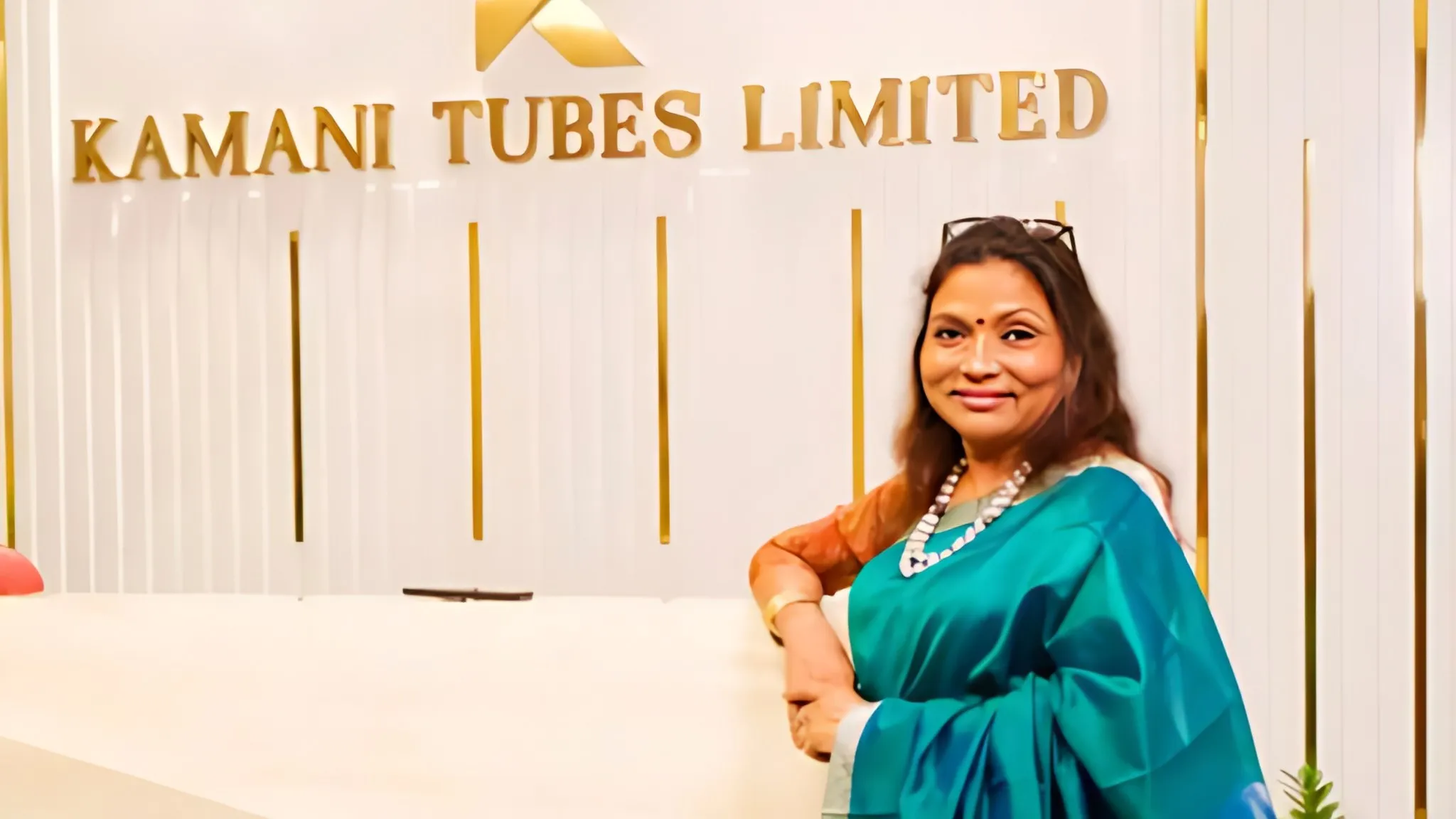
- In 2006 she became chairperson of Kamani Tubes, which owed lenders Rs 116 crore.
- Lenders waived penalties, interest and part of the principal; the company restarted production in 2010.
- She received the Padma Shri for trade and industry in 2013.
In this story5 sections
Kalpana Saroj became chairperson of Kamani Tubes in 2006, years after the Mumbai copper tube maker had stopped working properly. It owed lenders Rs 116 crore and was tied up in 140 court cases and a dispute between two unions, The Weekend Leader reported. She had never run a factory. By her own account, the company came out of the sick industries process in 2009 and restarted production in 2010.
Kalpana Saroj and a childhood cut short
She grew up in Akola district in Vidarbha, the eldest of five children of a police constable, Mahadeo, and the family lived in police quarters, Business Standard reported in 2015. At 12 she was taken out of school and married to a man from Mumbai about twice her age. She was harassed in her husband's home in an Ulhasnagar slum, and after six months her father brought her back, the paper reported. She has spoken openly about those years in interviews and public talks.
Around the age of 17 she returned to Mumbai and found work in a garment workshop in Lower Parel through a relative. She started as a helper and earned extra by stitching on the side, The Weekend Leader reported. Her parents and siblings later joined her in the city after her father lost his job.
From a Rs 50,000 loan to property
She applied for a Rs 50,000 bank loan under a government scheme for backward communities to start a tailoring business. It took about two years to come through, and by then she had moved into the more profitable steel furniture trade, Business Standard reported. She has said the wait still stays with her; when she later joined the board of a bank, she recalled running around for years for that loan, Open magazine reported.
Her break in property came with a plot in Kalyan that was caught up in litigation. She bought it cheaply, spent about two years getting it cleared with help from the district collector, and then developed it with a builder on a profit-sharing deal. "I didn't know anything about land deals till then," she told The Weekend Leader. Construction and, later, a sugar factory followed.
How Kalpana Saroj revived Kamani Tubes
Kamani Tubes was once a well-known name in Bombay industry. A feud in the Kamani family hurt production and led to labour unrest, and in 1989 the Board for Industrial and Financial Reconstruction handed the company to its workers to run, Business Standard reported. The decline continued and buyers stayed away. Around the turn of the century, a group of workers who had heard of her work came to her for help.
She put together a 10-member team of finance, marketing and legal people, bank officials and government consultants, and spent several years meeting the state finance minister and the company's lenders, The Weekend Leader reported. The banks agreed to waive penalties and interest and to write off part of the principal, and she sold one of her own properties in Kalyan to help repay the rest. Without the cut in penalties, she has said, the revival would not have been viable, The Himalayan Times reported.
She also settled with the unions and moved the factory from Kurla to Wada, outside Mumbai. The experience, she told Business Standard, made her "part-lawyer and part-chartered accountant". Kamani Tubes made a profit of Rs 3 crore in 2011, and by 2018 it was earning about Rs 5 crore a year, The Weekend Leader reported.
Recognition and the businesses around her
She received the Padma Shri for trade and industry in 2013, DNA reported. The government appointed her to the board of the Bharatiya Mahila Bank, where she was one of only three members from outside banking, according to Business Standard, and she has been a prominent member of the Dalit Indian Chamber of Commerce and Industry, Open reported.
In 2018 she headed six companies, including Kamani Tubes, Kamani Steel Re-Rolling Mills and Saikrupa Sugar Factory, with about 600 employees and a combined turnover estimated at over Rs 2,000 crore, The Weekend Leader reported. Kamani Tubes alone had an annual turnover of about Rs 100 crore that year, IDN reported. The company, which makes copper and copper alloy products such as brass rods, is listed as active in company records, with Kalpana Saroj on its board.
For more founders who rebuilt after setbacks, read our stories on Vijay Shekhar Sharma of Paytm and Albinder Dhindsa of Blinkit.
More from FoundersFeed: comeback stories and founders from Maharashtra.
This story is based on interviews Kalpana Saroj has given to the press, company filings and statements, and news reports, linked above. FoundersFeed did not interview Kalpana Saroj for this story. For corrections, write to editorial@foundersfeed.in.
Sources
- Business Standard: The road to riches (2015)
- The Weekend Leader: Kalpana Saroj and Kamani Tubes (2018)
- The Himalayan Times: Kalpana Saroj on reviving Kamani Tubes
- Open: She who broke two glass ceilings
- DNA: Padma awards conferred (2013)
- IDN: Kalpana Saroj profile (2018)
- Tofler: Kamani Tubes Limited company record
Questions readers ask
Who is Kalpana Saroj?
She is the chairperson of Kamani Tubes in Mumbai, a copper tube maker she revived after taking charge in 2006.
How did Kalpana Saroj revive Kamani Tubes?
She formed a team of finance, legal and banking experts, negotiated with lenders who waived penalties, interest and part of the principal, sold one of her own properties to repay the rest, and moved the factory to Wada.
How much debt did Kamani Tubes have?
About Rs 116 crore, along with 140 court cases, according to The Weekend Leader.
When did Kalpana Saroj receive the Padma Shri?
In 2013, in the field of trade and industry.
What other businesses does she run?
In 2018 she headed six companies, including Kamani Steel Re-Rolling Mills and Saikrupa Sugar Factory, as well as construction businesses.

Written by
Soumya VermaSoumya Verma is Managing Editor of FoundersFeed and edits most of our founder stories. She works inside one of North India's largest startup incubation centres, where she evaluates early-stage ventures on technology readiness and investor preparedness and drafts funding proposals under national innovation schemes. She has guided more than 75 founders through pitch, valuation and compliance.