The story in 30 seconds
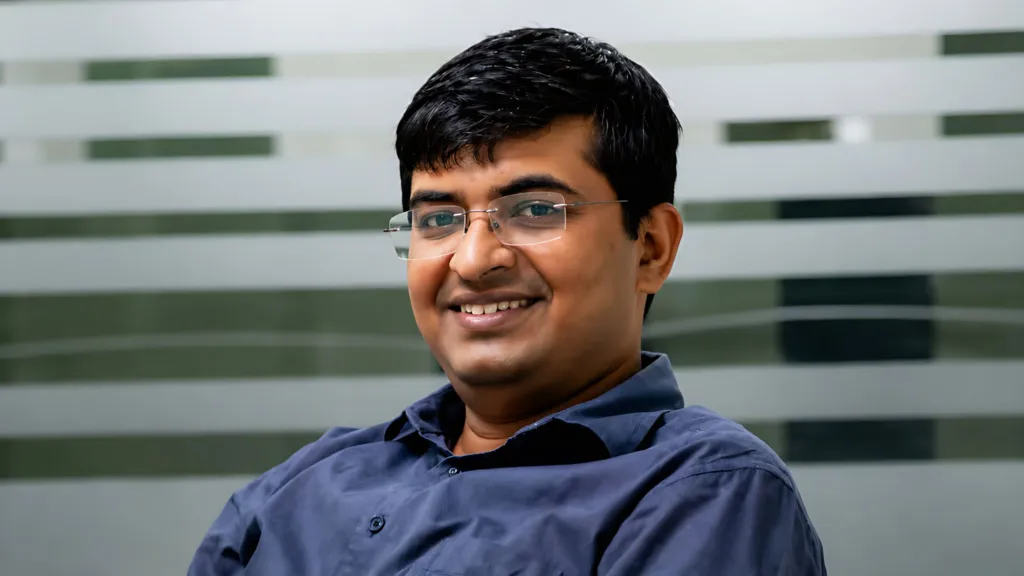
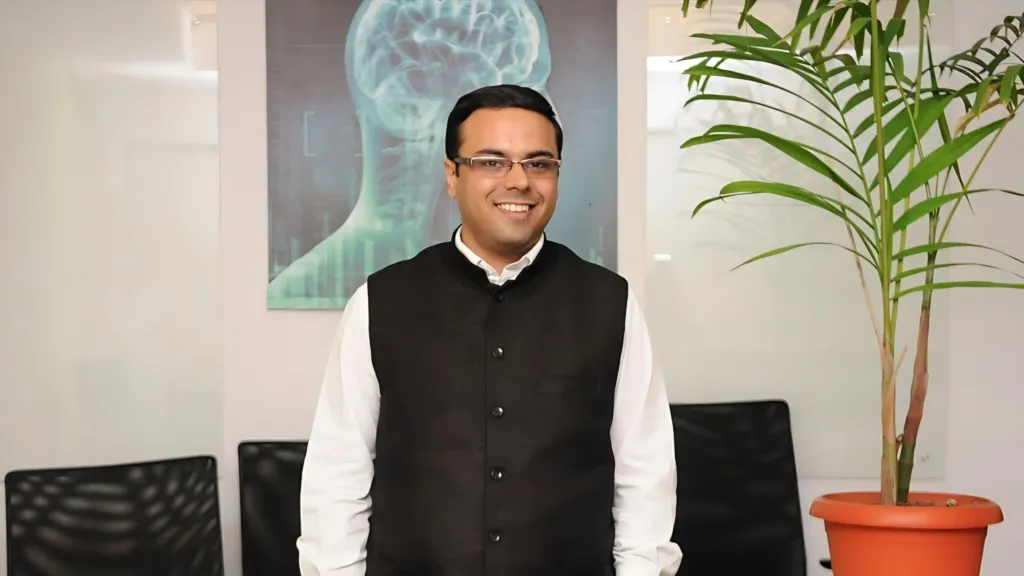
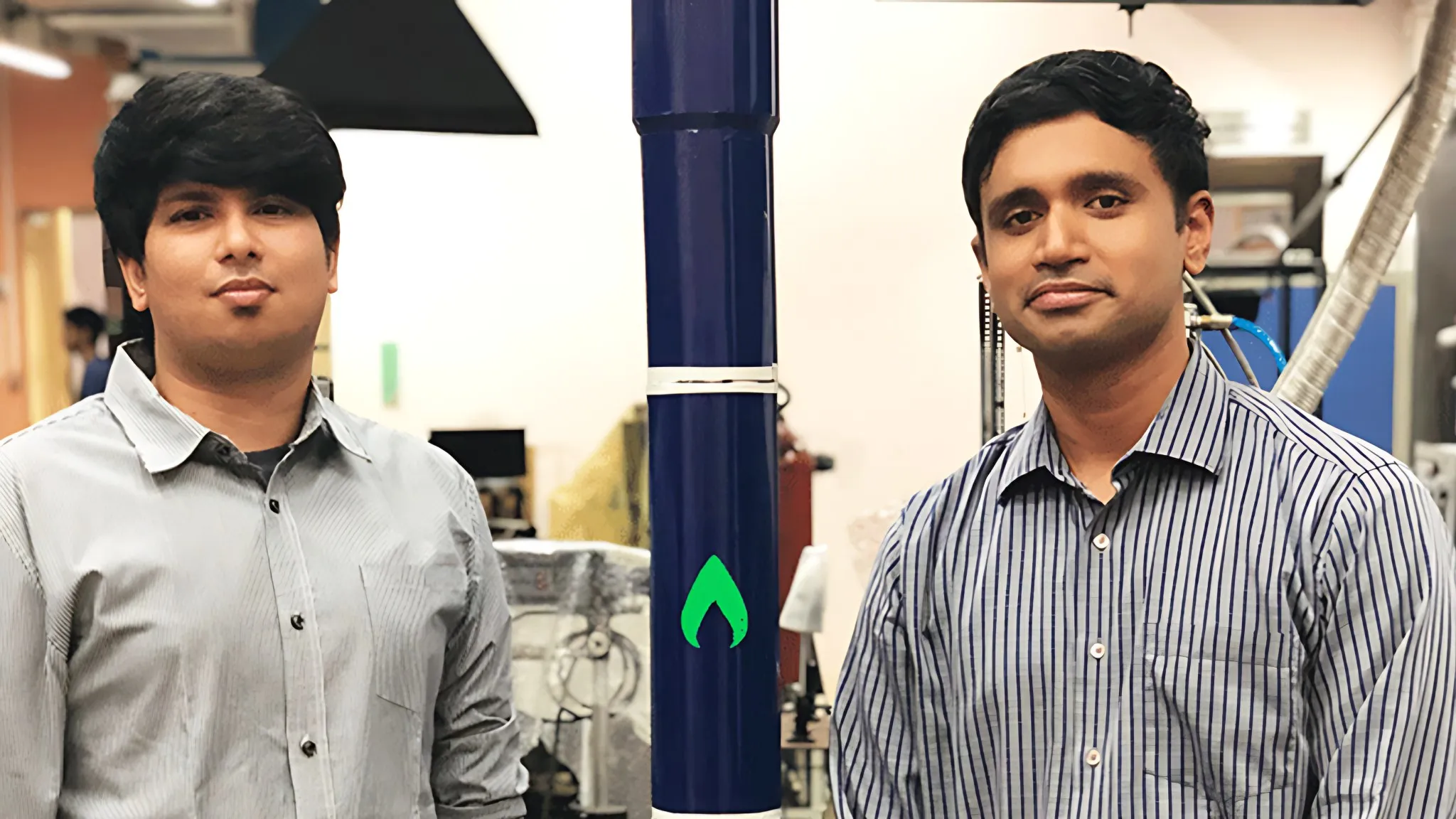
- Srinath Ravichandran and Moin SPM co-founded Agnikul Cosmos at IIT Madras in 2017.
- Its Agnilet engine is 3D printed as one piece of metal, with nothing bolted together.
- Agnikul received an Indian patent in 2022 and a US patent in 2025 for the engine and method.
- Its Agnibaan SOrTeD test rocket flew from India's first private launchpad in May 2024.
- It raised ₹150 crore at about a $500 million valuation and is preparing a booster recovery mission.
In this story4 sections
Srinath Ravichandran was living in Los Angeles when he noticed how hard it was for small satellite companies to get a launch on time and at a fair price, YourStory reported. Small satellites usually ride along on bigger rockets and go where the main customer goes. He wanted a rocket that could fly them on demand.
In 2017 he co-founded Agnikul Cosmos at IIT Madras with Moin SPM, IIT Madras professor Satyanarayanan Chakravarthy and Janardhana Raju, Outlook Business reported. The company was incubated at the institute, and its rocket engine factory sits in the IIT Madras Research Park in Chennai, according to YourStory.
An engine in one piece
"Rocket engines usually have 1000s of parts in them," Ravichandran said in 2022, Outlook Startup reported. Agnikul's bet was to print its engine, Agnilet, as a single piece of metal, with nothing bolted together. It test-fired Agnilet in February 2021, 3D Printing Industry reported.
The company applied for an Indian patent in late 2020 and received it in 2022, 3DPrint.com reported. A US patent followed in May 2025. It covers a method of printing a single-piece engine in which the combustion chamber, injectors, igniters, nozzle and cooling channels are made as one unit, with no bolts or seals between them, according to the US patent office's gazette.
Not everyone saw the idea as new. When the Indian patent came through, some industry experts questioned whether the engine was fully 3D printed, and companies such as Rocket Lab and Launcher had already used 3D-printed engines or combustion chambers, 3DPrint.com reported.
Four delays, then lift-off
In December 2020, Agnikul became the first Indian company to sign an agreement with ISRO, Outlook Startup reported. It built Dhanush, India's first private launchpad, at Sriharikota. Its first flight, a single-stage test rocket called Agnibaan SOrTeD, was called off four times before it finally lifted off on 30 May 2024, Outlook Business reported. It was the first flight powered by a single-piece 3D-printed engine, and India's first launch using a semi-cryogenic engine, according to YourStory.
Money and the next mission
In November 2025, Agnikul raised ₹150 crore, about $17 million, at a valuation of about $500 million, Business Today reported. The money is for scaling up production and recovering rocket stages, and for building on a newer patent that extends the working life of a rocket's upper stage, Free Press Journal reported. In May 2026, The Economic Times reported that Agnikul was in talks to raise $50 million to $75 million more at the same valuation, and that it had projected more than $200 million in revenue from soft commitments, NewsBytes reported.
A rival got to orbit first. In July 2026, Skyroot Aerospace's Vikram-1 became India's first privately developed rocket to reach orbit, The Space Review reported. Agnikul's answer is Mission 02, a two-stage Agnibaan whose first stage will try a controlled descent and ocean recovery, while the upper stage tries to keep working in orbit after releasing its satellite, Business Standard reported. Former ISRO chairman S Somanath joined Agnikul ahead of the mission.
"What Mission 02 demands from us is a step-change in engineering discipline," co-founder and COO Moin SPM said, Business Today reported. In October 2026 the company test-fired Agnite, the single-piece booster engine built for that flight, idrw reported. Agnikul has not yet put a satellite in orbit.
For more Indian inventors and patent holders, read our stories on Arunachalam Muruganantham and Dharambir Kamboj.
More from FoundersFeed: inventors and patent holders and founders from Tamil Nadu.
This story is based on interviews Srinath Ravichandran and Moin SPM have given to the press, patent records, company statements and news reports, linked above. FoundersFeed did not interview them for this story. For corrections, write to editorial@foundersfeed.in.
Sources
- YourStory: Bharat Innovates 2026 and Agnikul's 3D-printed rocket engine (2026)
- Outlook Business: Agnikul Cosmos halts maiden launch for the fourth time (2024)
- Outlook Startup: Agnikul Cosmos secures patent for single-piece 3D-printed engines (2022)
- 3D Printing Industry: Agnikul wins US patent for single-piece 3D-printed engine (2025)
- 3DPrint.com: Agnikul Cosmos patents 3D-printed rocket engine (2022)
- USPTO Official Gazette: US 12,313,024 B2 (2025)
- Outlook Business: How Agnikul finally launched Agnibaan SOrTeD (2024)
- Business Today: Agnikul raises ₹150 crore, hits $500 million valuation (2025)
- Free Press Journal: Agnikul Cosmos raises ₹150 crore (2025)
- NewsBytes: Agnikul in talks to raise $50-75 million (2026)
- The Space Review: Skyroot's Vikram-1 reaches orbit (2026)
- Business Standard: Former ISRO chief S Somanath joins Agnikul (2026)
- Business Today: S Somanath joins Agnikul board ahead of reusable rocket test (2026)
- idrw: Agnikul test-fires Agnite engine ahead of Mission 02 (2026)
Questions readers ask
Who founded Agnikul Cosmos?
Srinath Ravichandran (CEO), Moin SPM (COO), IIT Madras professor Satyanarayanan Chakravarthy and Janardhana Raju founded it in 2017.
What did Agnikul patent?
A single-piece 3D-printed rocket engine and the method to make it. It received an Indian patent in 2022 and a US patent in May 2025.
When did Agnikul launch its first rocket?
Agnibaan SOrTeD lifted off on 30 May 2024 from Dhanush, Agnikul's private launchpad at Sriharikota, after four called-off attempts.
How much is Agnikul worth?
It raised ₹150 crore in November 2025 at a valuation of about $500 million.
What is Agnikul's Mission 02?
A two-stage Agnibaan flight that will try to recover the first-stage booster from the ocean and keep the upper stage working in orbit.

Written by
Harshvardhan KothariHarshvardhan Kothari is Editor, Innovators and Deep Tech, at FoundersFeed. He covers India's AI and deep-tech builders, the research behind them and the rules that shape the sector, including MSME law and cross-border trade policy. He also tracks India's IPO pipeline.