The story in 30 seconds
- Nayar sold his entire HCL Technologies stake for about Rs 134 crore in 2012 and put it into Sampark Foundation.
- He and his wife Anupama registered Sampark in 2005 at his mother's urging.
- Sampark Smart Shala gives government teachers low-cost tools such as audio boxes, kits and an app, plus training.
- Sampark says its work has reached over 1.8 crore children in more than 1.4 lakh schools.
- Though Nayar once set 2025 as its closing date, Sampark marked 20 years in 2026 with new commitments.
In this story4 sections
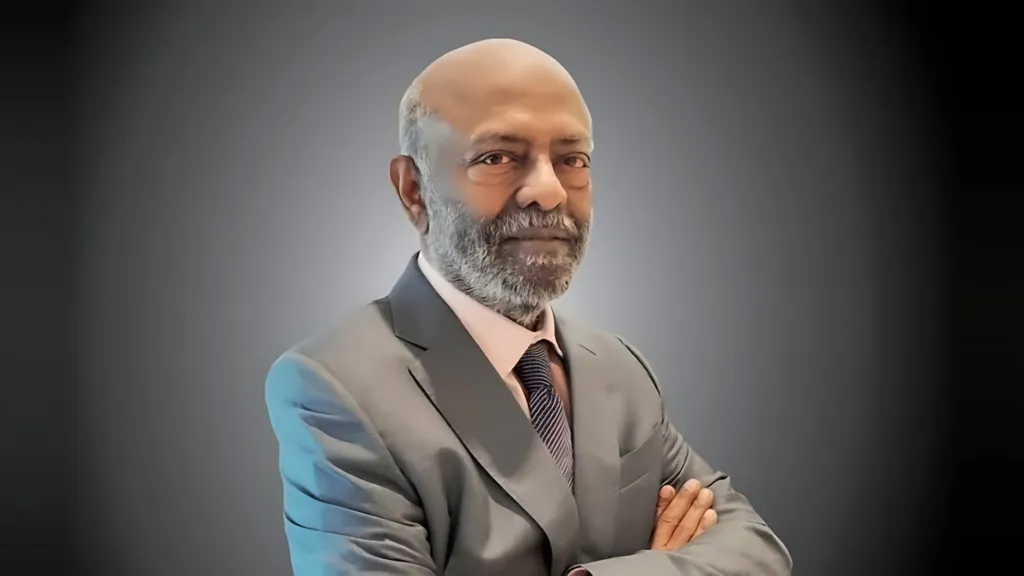
Vineet Nayar was running HCL Technologies when he sold his entire shareholding in the company in June 2012 for about Rs 134 crore and put the money into his non-profit, Sampark Foundation, Business Standard reported. Under him, HCL grew into a $4 billion company with over 87,000 employees. A year and a half after the sale, he left the HCL board to work full time on primary education in government schools.
How Vineet Nayar came to Sampark
Nayar joined HCL in 1985 after an MBA from XLRI. In 1993 he started Comnet, an HCL business that pioneered remote infrastructure management, and grew it into a $1.3 billion operation, Business Today reported. In 2005 he became president of HCL Technologies, Business Standard reported, and he stepped down as chief executive in January 2013. His management idea, employees first and customers second, shaped the company's policies and practices.
He lost his father when he was in class nine, and the family was left with Rs 300 in the bank, according to a 2013 profile published on his website. Sampark was registered in 2005 at the urging of his mother, Janak Nayar, a school teacher, with his wife Anupama as co-founder, EducationWorld reported. The magazine credits Anupama, a trained special educator, with devising the foundation's later strategy.
The low-cost model
Sampark works inside the government system. Its Sampark Smart Shala programme gives primary school teachers an audio sound box for teaching English and maths, teaching kits, 3D teaching aids and a mobile app to track learning, and trains the teachers to use them, India CSR reported in 2017. In Jharkhand that year, it agreed to cover 26,000 government primary schools and over 40 lakh children, investing up to Rs 40 crore and taking no money from the state government.
The kits run on batteries, and the cost of learning comes to Rs 65 per child, according to The Better India. Surveys it cited found that children's basic English and maths abilities at least doubled, and in some cases rose more than fourfold. In February 2020 the programme was named among the top 100 proposals in the MacArthur Foundation's competition for a single $100 million grant, India Education Diary reported.
Vineet Nayar and the 2025 deadline
Nayar once said Sampark would shut down by 2025, once its endowment was fully spent, The Better India reported. It is still running. In January 2026 it marked 20 years with a Rs 25 crore commitment to create 20,000 more smart schools across eight states and to roll out an AI-based classroom monitoring platform, at no cost, in about 80,000 government schools, Education21 reported.
By then, the foundation said, its work had reached more than 1.8 crore children in over 1.4 lakh government schools, trained more than 8.5 lakh teachers and set up 40,000 smart classrooms. In August 2025 it launched a Smart School-Smart Block programme with the Brihanmumbai Municipal Corporation in 217 Mumbai municipal schools, the Free Press Journal reported. Its newer tool, a plug-and-play device, turns an ordinary television into an interactive classroom with over 1,000 hours of offline content matched to state textbooks.
The couple have committed $100 million, about Rs 820 crore, to the foundation, EducationWorld reported. The model Vineet Nayar funds still rests on one idea: give government teachers cheap tools and training, and measure what children learn.
For more founder stories, read our pieces on Alakh Pandey of PhysicsWallah and Sridhar Vembu of Zoho.
More from FoundersFeed: education founders and founders from Uttar Pradesh.
This story is based on interviews Nayar has given to the press, Sampark's statements and news reports, linked above. FoundersFeed did not interview him for this story. Reach and learning figures are Sampark's own, as reported by the outlets cited. Sources differ on the founding year: Business Today has given 2004, while EducationWorld says Sampark was registered in 2005, the year used here. For corrections, write to editorial@foundersfeed.in.
Sources
- Business Standard: Vineet Nayar steps down from HCL Tech board (2013)
- Vineet Nayar website: The Reinvention of Vineet Nayar (2013)
- Business Today: Former HCL Technologies CEO Vineet Nayar (2013)
- EducationWorld: Go-getting philanthropist Vineet Nayar
- India CSR: Sampark Smart Shala across Jharkhand (2017)
- The Better India: Sampark Foundation
- India Education Diary: Sampark in MacArthur Foundation top 100 (2020)
- Education21: Sampark invests Rs 25 crore in smart schools (2026)
- Free Press Journal: BMC and Sampark Foundation (2025)
Questions readers ask
Who is Vineet Nayar?
The founder and chairman of Sampark Foundation and a former chief executive of HCL Technologies.
What does Sampark Foundation do?
It works with state governments to improve learning in government primary schools using low-cost teaching tools and teacher training.
How did he fund it?
He sold his entire HCL Technologies shareholding for about Rs 134 crore in 2012 and put the money into Sampark.
How many children has Sampark reached?
Sampark says its work has reached over 1.8 crore children in more than 1.4 lakh government schools.
Did Sampark shut down in 2025?
No. Nayar had once set 2025 as its end date, but in January 2026 it marked 20 years with fresh commitments.

Written by
Sagar PrajapatiSagar Prajapati is Audience Editor at FoundersFeed. He works in digital content and audience analytics, looks after our WhatsApp Channel and social pages, and writes about how young companies build visibility.