The story in 30 seconds
- Suyash Singh and four IIT Madras students started GalaxEye in 2021, after working together on a Hyperloop team.
- Its first satellite, Drishti, launched on a SpaceX Falcon 9 on 3 May 2026.
- At 190 kg it is the largest satellite launched by India's private sector, ThePrint reported.
- Drishti combines an optical camera and synthetic aperture radar, so it can image through cloud and at night.
- GalaxEye has raised more than $18.8 million and plans a constellation of at least 10 satellites.
In this story4 sections
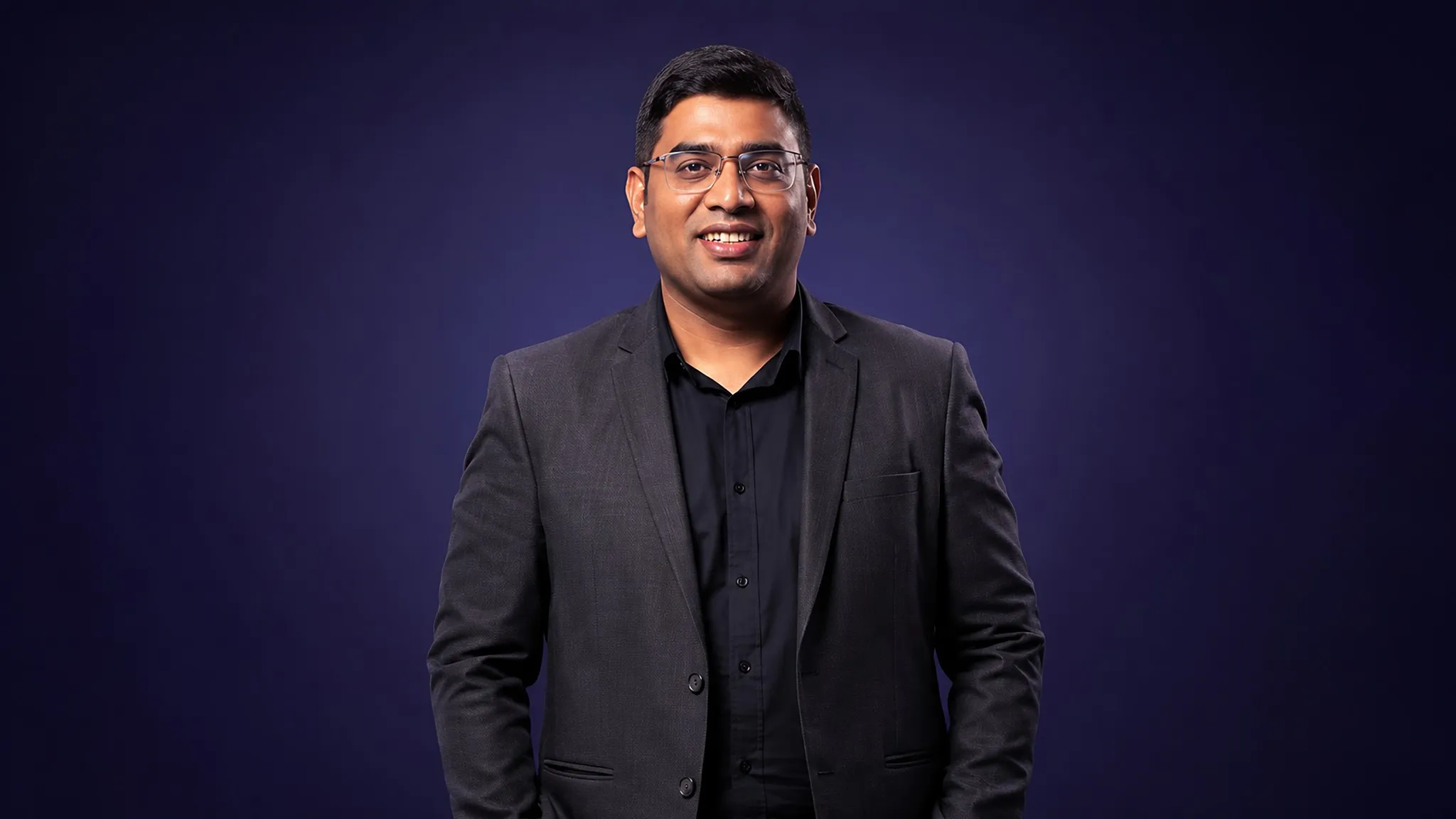
Suyash Singh was one of five master's engineering students at IIT Madras who started GalaxEye in 2021, ThePrint reported. On 3 May 2026 the Bengaluru company's first satellite, Drishti, went up on a SpaceX Falcon 9 rocket from California. At 190 kg it is the largest satellite launched by India's private sector, according to ThePrint, and it carries both an optical camera and a radar on one platform.
Suyash Singh and the Hyperloop team
The five founders, Singh as chief executive, Denil Chawda as chief technology officer, and Kishan Thakkar, Pranit Mehta and Rakshit Bhatt, had worked together on Team Avishkar Hyperloop, an IIT Madras student team that competed in SpaceX's Hyperloop competition, OfficeChai reported. The group began working on the idea in 2020 while they were students and recent graduates, according to Electronics For You, and the company was incubated at the IIT Madras Incubation Cell. Singh is an alumnus of the institute's aeronautical engineering department.
Singh was named in Entrepreneur India's 35 Under 35 list in 2025. He has said the company was born from the idea of fusing radar and optical sensors on the same satellite.
What Suyash Singh and his team built
Optical satellites take sharp pictures but cannot see through clouds or work in the dark. Synthetic aperture radar, or SAR, can image at night and through cloud. Until Drishti, operators used separate satellites for the two, such as the European Space Agency's Sentinel-1 and Sentinel-2, ThePrint reported. GalaxEye mounts both sensors on a shared optical bench so they look at the same point on Earth at the same time, and software on board analyses the data before sending it down. The company calls the approach OptoSAR and says Drishti is the world's first OptoSAR satellite.
Drishti orbits at about 500 km, has a resolution of 1.2 to 3.6 metres, uses an NVIDIA Jetson Orin chip to process data in orbit and has electric propulsion and a folding radar antenna, according to OfficeChai. The team ran more than 500 test flights on drones, Cessna aircraft and high-altitude platforms, and flew a payload on ISRO's POEM platform in December 2024. The satellite was shipped to the US in March 2026.
"The world today demands faster, sharper, and more persistent eyes in the sky," Singh told ThePrint. The company expects its imagery to be used in defence, agriculture, disaster management and maritime monitoring.
Funding and the constellation
Speciale Invest led GalaxEye's pre-seed round in June 2021 and a $3.5 million seed round in 2022. Mela Ventures and Speciale co-led its Series A, with ideaForge and Rainmatter among the backers, and the company has raised more than $18.8 million across nine rounds from over 50 investors, including Infosys, OfficeChai reported. In February 2026 it took Rs 5 crore in venture debt from SIDBI. In 2024 it won the government's iDEX-DIO defence innovation challenge, ThePrint reported.
Drishti is the first of a planned constellation of at least 10 satellites, which Singh told The Economic Times would launch over the next two and a half years, Inc42 reported. The full constellation is meant to revisit any point on Earth every two days, with each satellite built to last four to five years, according to OfficeChai. Prime Minister Narendra Modi called the launch a major achievement in a post on X. The founders had first collaborated in the Hyperloop team, The Federal noted before the launch.
For Suyash Singh and his co-founders, the road from a student Hyperloop project to orbit took about five years.
For more founder stories, read our pieces on the founders of Skyroot Aerospace and the founders of Sarvam AI.
More from FoundersFeed: student founders and founders from Karnataka.
This story is based on news reports and interviews Suyash Singh has given to the press, linked above. FoundersFeed did not interview him for this story. Sources differ on whether the company began in 2020 or 2021; it began work in 2020 and was incubated in 2021. Funding totals are as reported. For corrections, write to editorial@foundersfeed.in.
Sources
- ThePrint: Bengaluru startup launches world's first OptoSAR satellite (2026)
- OfficeChai: GalaxEye launches OptoSAR imaging satellite (2026)
- Electronics For You: GalaxEye's satellite constellation
- Entrepreneur India: 35 Under 35 (2025)
- Inc42: GalaxEye launches maiden satellite (2026)
- The Federal: GalaxEye satellite set for May 3 launch (2026)
Questions readers ask
Who is Suyash Singh?
The co-founder and CEO of GalaxEye, a Bengaluru space company started by five IIT Madras students.
What is GalaxEye's Drishti satellite?
A 190 kg Earth observation satellite that carries an optical camera and a synthetic aperture radar, launched on 3 May 2026.
Why combine optical and radar imaging?
Optical sensors give sharp pictures but cannot see through cloud or at night; radar can, so one satellite with both can image in all weather.
Were GalaxEye's founders students?
Yes. ThePrint reported that the company was incubated at IIT Madras in 2021 by five master's engineering students.
How much has GalaxEye raised?
More than $18.8 million across nine rounds from over 50 investors, OfficeChai reported.

Written by
Dr. Mayank RajDr. Mayank Raj is Editor-in-Chief of FoundersFeed. He has spent more than eight years building India's startup incubation infrastructure, helping establish one of North India's largest incubation centres and mentoring more than 150 startups from first idea to first cheque. He now leads a national programme bringing innovation clubs and incubation centres to schools and colleges across India, and has been recognised with a national leadership award for that work.